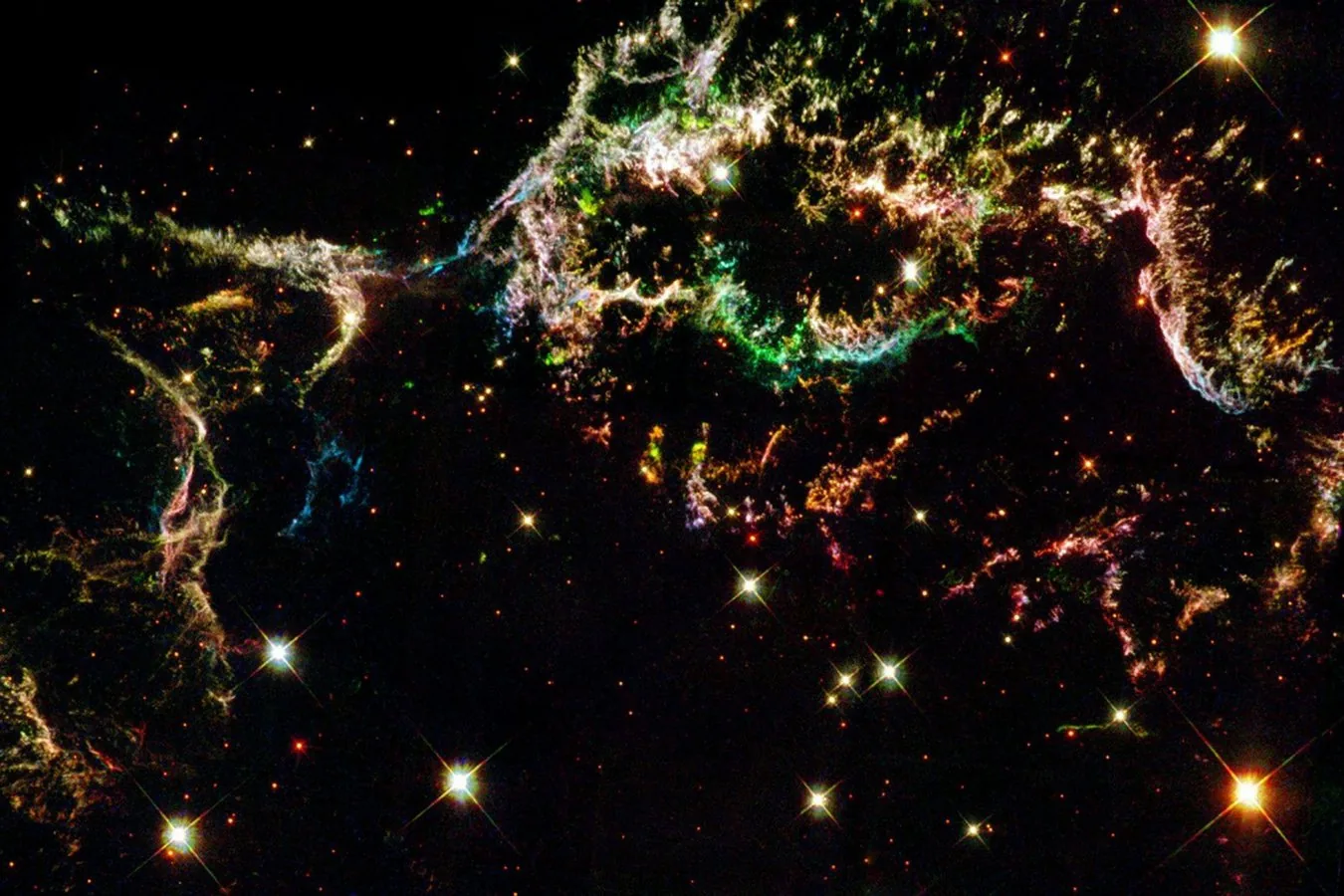
Dark energy may not actually exist. This is the conclusion of a controversial analysis that says not only have we got this wrong, but the universe’s expansion isn’t speeding up either, rebuffing a central pillar of modern cosmology. Though many researchers have yet to be convinced.
Since Edwin Hubble’s observations of pulsating stars in 1929, astronomers have known that the universe is expanding. For decades, that expansion was expected to happen at a roughly constant rate, but observations of a type of exploding star called a Type Ia supernova in the 1990s changed this. By measuring the positions of these supernovae, two groups announced that the speed at which the most distant galaxies are moving apart is increasing.
And to explain this surprising result, physicists invoked a mysterious new kind of energy, dubbed dark energy, responsible for expanding the universe. Advertisement Subir Sarkar at the University of Oxford and his colleagues have now published an analysis claiming this picture is incorrect. Sarkar first began looking into the original claims in 2014, when the two groups behind the expansion of the universe results made their data publicly available.
He and his colleagues ran an independent check and they concluded the evidence had not actually reached the statistical threshold physicists need to claim a discovery. “This created a big shock,” says Sarkar. The team’s claims triggered substantial pushback.
Many cosmologists found their statistical methods unfamiliar, and others made specific criticisms about things that hadn’t been taken into account in the analysis, such as the cosmic sum rule that says that the percentages of dark energy, dark matter and regular matter should add up to one. Over the years, Sarkar and the team have released more papers and received more pushback, but they now believe that they have countered it all. In their latest analysis, they use the most up-to-date data set available, called Pantheon+, which catalogues 1701 supernovae, and factored in many of the suggestions they received.
One suggestion had a particularly big impact. A group of researchers at Yonsei University in Seoul, South Korea, had been compiling evidence that the Type Ia supernovae are not as reliable as thought. They found that the supernovae appear to be dimmer when they form earlier in a galaxy’s life.
Because of how long light takes to travel through the universe, the light we see from distant galaxies comes from when they were much younger. If these young galaxies had consistently dimmer supernovae, it would have led cosmologists to overestimate how far away they were and therefore overestimate the rate of expansion of the universe. It was by including the corrections from this group at Yonsei University that Sarkar and his colleagues’ analysis found the universe’s expansion may not be speeding up at all.
As a result, they concluded that dark energy is no longer needed to explain the supernovae. Many cosmologists are sceptical that it is possible to describe the universe as a whole without dark energy. But some see this development as fitting in with other emerging challenges with our understanding of the universe.





Comentários (0)
Entre ou cadastre-se para comentar.