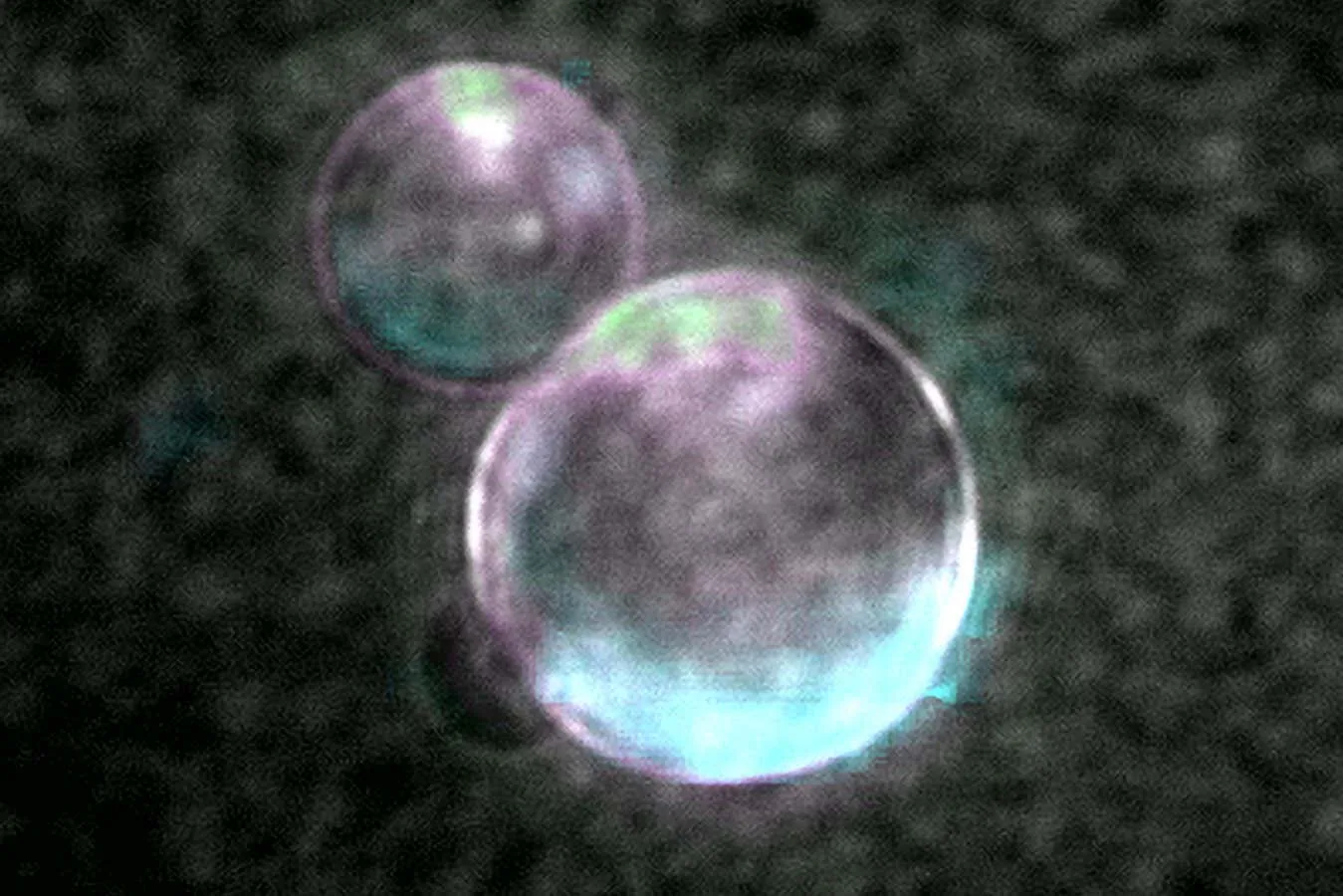
The “SpudCell” is being proclaimed by its creators as a major advance in synthetic biology. Some of this hype is justified – yes, it’s a cell, but perhaps not quite what one could call a living cell. It has 36 genes that allow it to copy DNA and replicate in a primitive way, but it needs a lot of outside help and fails after five or so divisions.
That is, however, much more than any other team has achieved, so it is arguably the greatest feat of bioengineering to date. Created by Kate Adamala at the University of Missouri and her colleagues, the team is now making the SpudCell project open-source so it can be developed further and even made capable of dividing indefinitely. Here’s what you need to know: Advertisement What is the SpudCell?
It’s a step towards creating a minimal lifeform whose functions are fully understood. Previous attempts involved deleting genes from bacterial cells whose genomes are small to start with. For instance, in 2016 a bacterium with 901 genes was stripped down so it had just 493 genes.
Adamala’s team did things the other way round, starting with just 36 genes. These mostly come from E. coli bacteria but there are also some from phage viruses that infect bacteria and one for a fluorescent protein from jellyfish to help make the cells visible.
So, is it a lifeform? No. It can do some of the things that living cells do, such as replicating its genes and dividing, but it doesn’t do them well, and it needs a lot of outside help just to do them badly.
For instance, the researchers have demonstrated evolution in the sense that when they introduced a beneficial mutation, those cells did better. But the mutation had to be introduced deliberately rather than occurring spontaneously. “I think I would be satisfied with calling it living if it’s replicating indefinitely and if it’s capable of Darwinian evolution,” says Adamala.
Can we really call it a synthetic cell, then? That depends on how you define things. It is a synthetic cell in the sense that it’s been put together in a lab and does some of the things a cell does.
But it’s been put together using parts of existing cells – mainly those 36 genes – rather than being created entirely from scratch. It could be thought of as an extremely stripped down E. coli with a few additions from other viruses, bacteria and jellyfish.
Free newsletter Sign up to The Daily The latest on what’s new in science and why it matters each day. How was it assembled? The researchers engineered the 36 genes into seven circular pieces of DNA.
They made lots of copies of them and put them into a solution containing all the other things the cells need, like the building blocks of DNA and proteins, and fatty molecules that spontaneously form cell-like bubbles. Some of these bubbles ended up with all seven parts of the genome. The cells are then kept alive by two of the genes coding for proteins that form pores in the membrane, allowing some small molecules to enter.
Larger molecules are supplied in the form of small bubbles that fuse with the cells. So the cell is supplied fed with all the building blocks of life, because it can’t make any itself. How do the cells divide?







Comentários (0)
Entre ou cadastre-se para comentar.