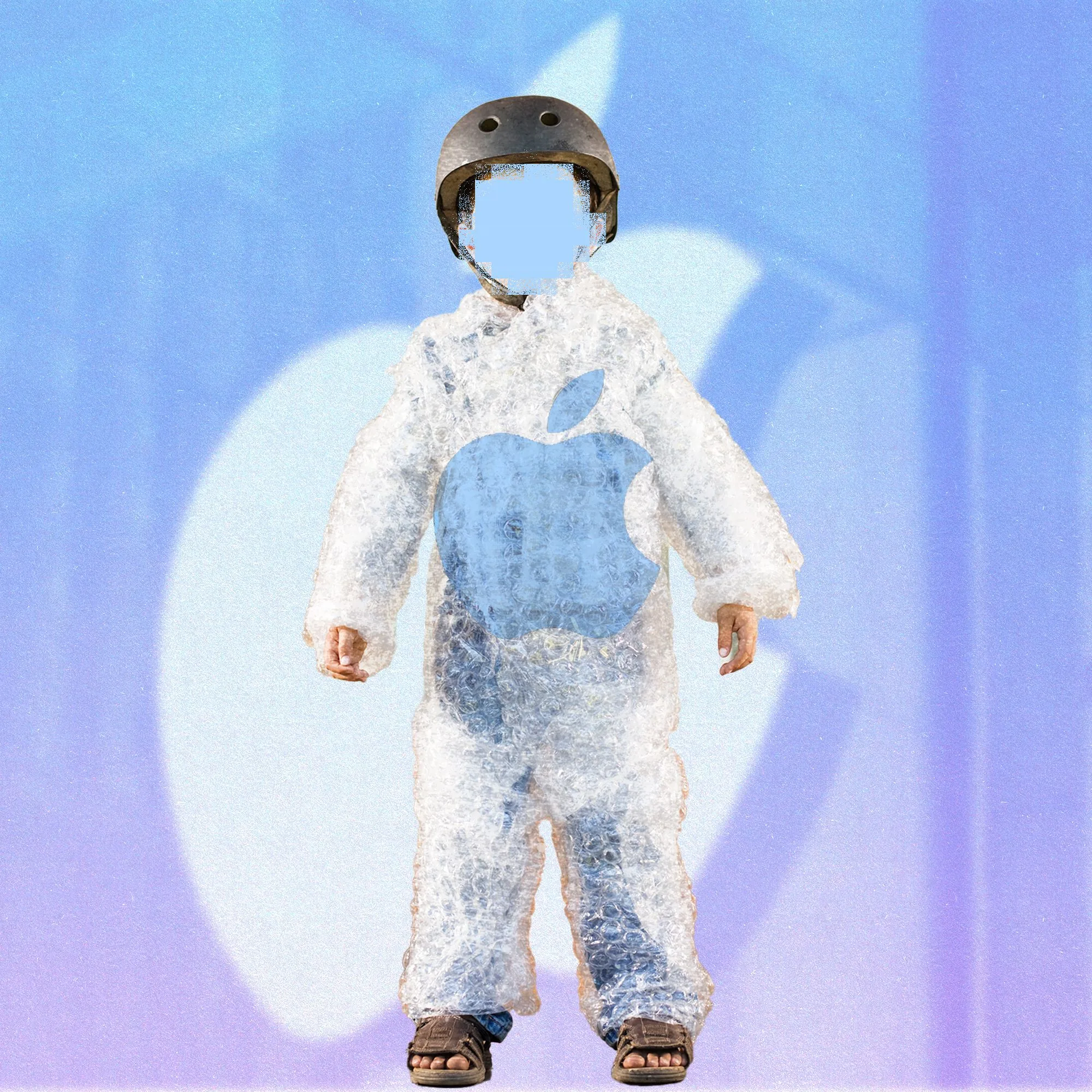
In June, at its Worldwide Developers Conference, Apple spent an unusual chunk of time during its keynote talking up new Child Safety features coming to its devices later this fall. The addition of these features came as a surprise to Sarah Gardner, who just so happened to be tied to a tree outside Apple Park in Cupertino, California, at the same time. It was the fifth time Gardner—founder and CEO of Heat Initiative, a nonprofit that advocates for child safety in Big Tech—had shown up at Apple Park to protest and draw attention to what she says is the lack of child protection guardrails in Apple products.
This time, something different happened. Apple answered. “Overall, it was a huge win that they spent 10 minutes of the keynote addressing child safety, because that never would have happened a few years ago,” Gardner tells WIRED.
“Apple, as a company, tried to ignore for a long time that they were part of a child’s online experience at all. Echoes of ‘we’re just hardware’ come to mind when I think of Apple's approach to child safety.” Gardner, who has spent 15 years in online trust and safety spaces, says she worked alongside companies for 10 years before starting the Heat Initiative, and Apple “was consistently absent” from child safety conversations. While Gardner doesn't think the features Apple announced in iOS 27 and its other hardware platforms are groundbreaking in improving a kid's safety experience using Apple products, they're a positive step.
The advocacy of Gardner and others, along with the lawsuits Apple is facing over child safety issues, have amplified the issue, she says. “It’s all pressuring them to be forced to admit that they need to address child safety as a whole.” Apple is currently facing a lawsuit from West Virginia, which alleges that the company's business practices safeguard child sexual abuse materials, also known as CSAM. The CSAM issue goes back a few years when Apple announced a photo-scanning tool to detect such material hosted on its iCloud servers without intruding on user privacy.
But after widespread criticism from privacy and security experts for the technology's surveillance capabilities, Apple killed it. At the time, Apple told Heat Initiative that it “concluded it was not practically possible to implement without ultimately imperiling the security and privacy of our users.” Gardner still wants Apple to implement this tool, claiming it balances child safety and privacy. But part of her protest outside Apple Park this June also brought attention to “nudify” apps hosted on the App Store; the Tech Transparency Project found 47 such apps in January.
These apps use AI to remove clothing from real photos, making subjects appear nude. WIRED reported in 2024 that single-sign-on systems from several Big Tech companies, including Apple, are enabling people to sign up easily for deepfake websites, and in response, Apple removed developer accounts connected to those websites. Gardner also asked why Apple never removed Grok, which still hosted sexualized deepfakes of celebrities as recently as June, from its App Store.
“When someone points out that these apps are deepfaking teenagers or creating child sexual abuse materials, they sort of quietly remove them from the App Store without making any announcement about it, so their inconsistency in terms of the App Store is really pronounced,” Gardner says.







Comentários (0)
Entre ou cadastre-se para comentar.